
Van Gogh, Rousseau, Corot: In the Forest

Van Gogh Museum
7 July - 10 September 2017

The exhibition 'Van Gogh, Rousseau, Corot: In the Forest'combines wooded views and landscapes by Vincent van Gogh with those of such painters as Théodore Rousseau and Camille Corot.
These French artists were among those who retreated to the Forest of Fontainebleau in order to paint the unspoiled landscape. They favoured motifs such as trees, vegetation and the play of light and shade on the foliage and the ground.

Trees, woodland and undergrowth
Van Gogh, too, worked as much as possible out of doors, in the midst of nature, invariably directing his gaze at the trees, woodland and undergrowth. He sought to depict the forest in such a way ‘that one can breathe and wander about in it — and smell the woods’.

In this summer presentation, Van Gogh’s paintings are being shown alongside those of Rousseau, Corot and other artists from the collection of the Van Gogh Museum and The Mesdag Collection. The exhibition also features several extraordinary loans:


Van Gogh’s Landscape with leaning trees (1883)
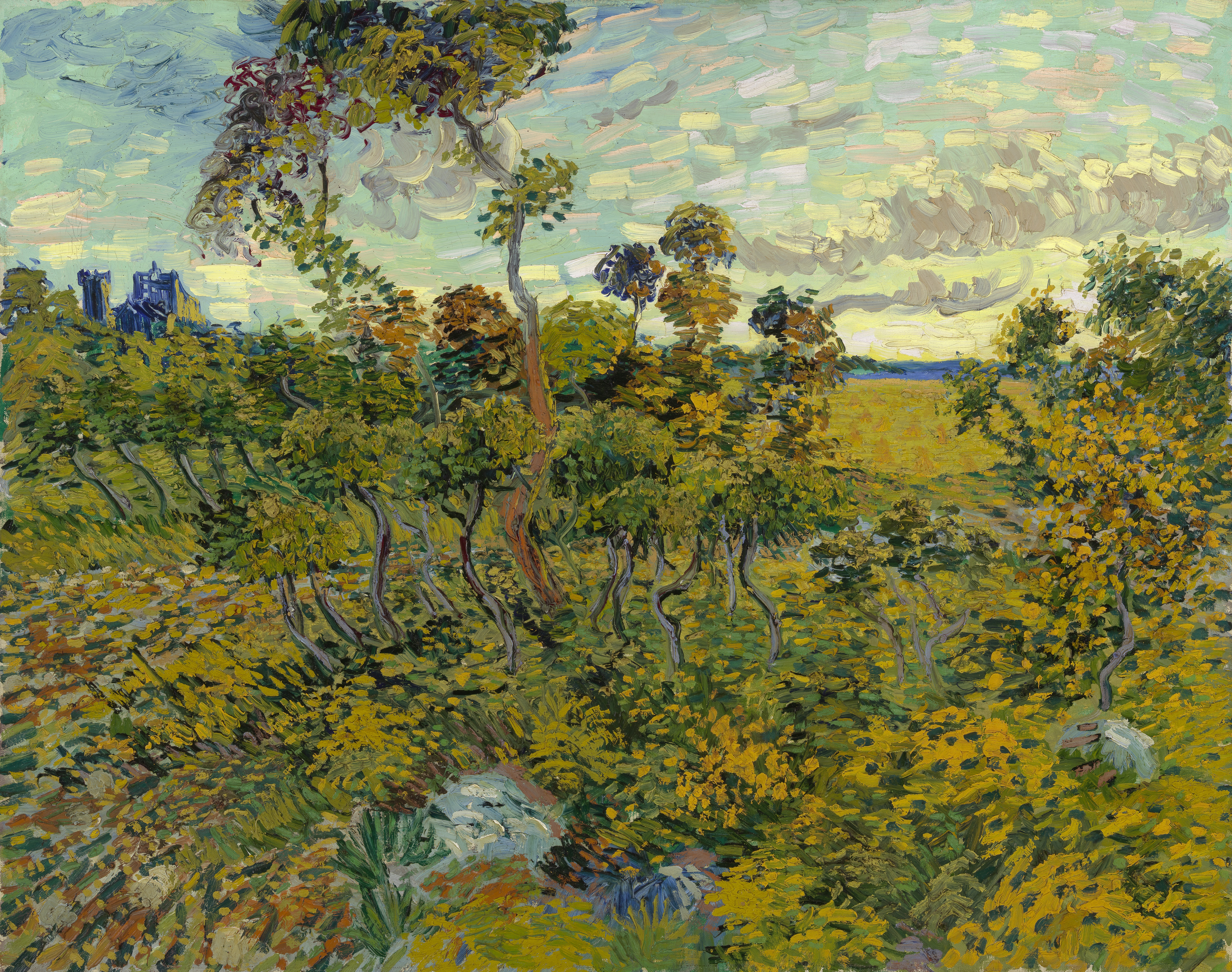


and Sunset at Montmajour (1888), both in private collections,


alongside Pollard Birch (1885), from the Van Lanschot Collection.

Vincent van Gogh, Undergrowth, 1889
 
Vincent van Gogh, Undergrowth, 1889, oil on canvas, 73.0 cm x 92.3 cm, Van Gogh Museum, Amsterdam (Vincent van Gogh Foundation)


Vincent van Gogh, Path in the Woods, 1887 


More images

Comments

Popular posts from this blog

Món ăn làm đẹp da, chống nếp nhăn, trị nám da hiệu quả nhất

Yến sào hầm nước dừa, hạt sen -Công dụng: Nhuận phổi ngưng ho, giảm béo, trắng da, trị nám da hiệu quả. -Nguyên tố vi lượng: Calci, acid amin, chất nhựa. Protein trong yến sào tự nhiên chiếm khoảng 50%, thành phần còn lại là calci, acid amin, sulfor. Vậy làm sao hằng ngày chúng ta có thể hấp thu được lượng sữa uống? Điều quan trọng là, trong yến sào có chứa phân tử sinh trưởng biểu bì và hormon thúc đẩy quá trình phân chia tế bào, thúc đẩy sự tái tạo mới, tăng cường sức đề kháng cho cớ thể, khôi phục nguyên tố, cho bạn một làn da trắng và mịn màng. -Nguyên liệu: Yến sào 30g, nước dừa 200ml, đường phèn, hạt sen 60g. -Cách làm: 1. Yến sào ngâm vào nước khoảng 4 giờ, loại bỏ tạp chất, lông vụn, rửa sạch, để ráo nước, chuẩn bị sẵn. Hạt sen ngâm mềm, loại bỏ tim, để sẵn. 2. Bỏ đường phèn vào 600ml nước để sooim cho đường tan ra, sau đó cho yến sào và hạt sen vào, đậy nắp lại, chưng cách thủy khoảng 1 giờ 30 phút, rồi cho nước dừa vào nấu 15 phút. -Mẹo nhỏ: 1. Yến...

“The Sweat of Their Face: Portraying American Workers”

Smithsonian's National Portrait Gallery November 3, 2017 – September 3, 2018    The Smithsonian's National Portrait Gallery opens this week “The Sweat of Their Face: Portraying American Workers,” which brings together nearly 100 representations of laborers to explore the role of working people in the formation, self-definition and development of the United States. Featuring paintings, sculptures, drawings, photographs, prints and time-based media, the multifaceted exhibition offers a powerful visual history of American labor. Historic images of mill girls in factories, newsboys on city streets and proud artisans and craftsmen appear alongside contemporary images of working-class men and women. Spanning the course of American history, “The Sweat of Their Face” encourages viewers to reflect on the conditions and repercussions of labor, particularly with regard to evolving relationships between those who work and those who benefit from work....

Alma-Tadema: At Home in Antiquity

Fries Museum in the Netherlands  since October 2016 Belvedere, Vienna  February 22 to June 18, 2017 Leighton House Museum, London 7 July - 29 October 2017 Sir Lawrence Alma-Tadema, A Coign of Vantage , 1895 (detail). Collection of Ann and Gordon Getty #almatadema Alma-Tadema: At Home in Antiquity (7 July – 29 October 2017) explores Lawrence Alma-Tadema’s fascination with the representation of domestic life in antiquity and how this interest related to his own domestic circumstances expressed through the two remarkable studio-houses that he created in St John’s Wood together with his wife Laura and daughters. Born in the north of the Netherlands, the exhibition traces his early training and move to London in 1870 where he established a hugely successful career at the heart of the artistic establishment. His work fixed ideas in the popular imagination of what life in the ancient past ‘looked like’ – ideas and images that were taken to the stage, film and that remain with us to...